Legado Sharpe & Fischer

your multi-lingual communications agency specialised in sustainable development

International Communications – Sustainable Development – Human Rights – Culture

Legado Sharpe & Fischer SL is a multilingual communications agency based in Valencia, Spain, specialising in sustainable development and human rights projects around the world.

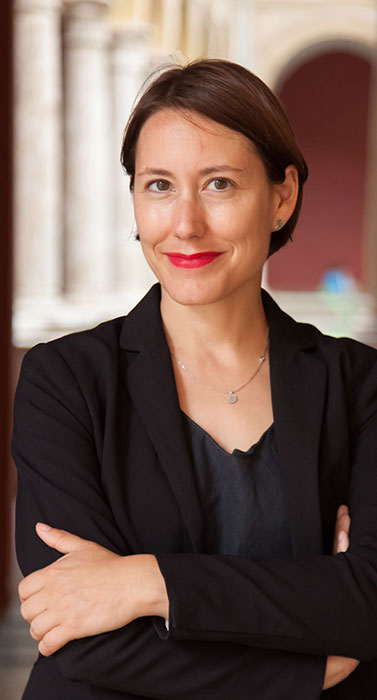
Our Co-Founder and CEO Dorothee Fischer has more than 20 years of experience working in international communication projects. We collaborate with international organisations (Council of Europe, UN), EU institutions and programmes (DG INTPA, DG REGIO, EU Delegations…) as well as with private and non-profit stakeholders worldwide.

Our core strength lies in creating comprehensive communication and outreach strategies, which we execute through diverse channels—whether it’s social media, websites, video production, graphic design, or publications. In addition to strategy and content development, we specialise in organising, moderating, and facilitating events and training sessions that are impactful and engaging.

We have grown to be a small, but highly-dedicated and interdisciplinary team who would like to help you solve your communication problems – no matter how complex the content! We assist you in developing creative ideas to reach your target groups, we train your staff and will increase your project’s overall impact.

We are here to help solve your communication challenges, no matter how complex, and to bring creative solutions that resonate with your target audience. We also offer staff training to ensure your project has a lasting impact.

Contact us today to explore how we can craft a tailored communication solution that fits your organisation’s needs!

Blog articles

Women’s Walking Tour to the Alps

I have decided to no longer post-pone my dreams… So this summer, I am taking a group of women to walk together in the Alps. A week of connection with...

Reflections on 2025 and what’s coming in early 2026

December is always a good moment to look back on the year. And I have to admit that its beginning was rather challenging. Due to the geopolitical situation — among...

Instagram Feed

@soulfulcomms
Doro Fischer

@soulfulcomms

Communications for sustainable development Certified business coach Travel insights Living in a #patchworkfamily with @spiritualchefcoacholi
  • It was so much more than a holiday. It was a journey back to ourselves. 

At the end of June, I walked through the Alps with a small group of women, along the river Lech between Austria and Germany.

Six days on foot. One of Europe's last wild rivers. The conversations. The long silences. The rain on day two that soaked us to the skin and somehow became the best day of all.

For one week, we were nobody's mother, boss, daughter or partner. Just ourselves.

#WomenWhoInspireTheWorld #WomensCoaching #WalkingInNature #Lechweg #Alps
  • What do a washing machine and artificial intelligence have in common?

Both promised to give us our time back. Both, somehow, did the opposite.

In the early decades of the last century, when the first electric appliances reached ordinary homes, the advertisements promised a housewife's paradise. Finally women could spend their afternoons on the sofa, reading or chatting with friends, while mothers’ new little helpers magically washed the clothes and the dishes.

It never happened. The historian Ruth Schwartz Cowan called this the irony of household technology: the time the machines freed up was rapidly filled again. Standards rose, the helping hands disappeared, and in many cases work outside the house took its place. Today we can hardly picture how anyone could manage without them.

The same thing is happening with AI. In the first months it felt like magic - a 40-page report drafted in a day, meeting notes ready in minutes. And yet none of us ended up with a three-day work week. Expectations climbed instead. I have never written more concept notes, summary reports and strategies than I do now. What used to be a nice-to-have, kept for the really important moments or projects, has become the new normal. For every small event I am now expected to produce an elaborate communication plan, when the real output is still a few social media posts and a press release.

I notice a new digital divide opening inside teams, too, between the colleagues who have integrated the new tools into their daily work methodology and those who haven't.

And in the end it all comes down to expectation management. Once we adjust to the new speed, no time is really saved. It just fills up again, and not always with things that matter.

Twelve years ago, I became my own boss and chose freedom over security. One of the things I have always valued most is deciding on my own schedule: when and where I work, and also, how much. So productivity definitely matters to me. But so does protecting the space in my agenda for the people and the activities that are really important to me. And these boundaries have to be set by humans, not by the machines that make us faster.
  • What's your take on your Second Life?? Full article in my profile...
  • "Is it true that people who grew up in the 80s cycled around freely, everywhere?"

This question keeps appearing on my social media feeds lately, and today, on #WorldBicycleDay, it set off a few reflections.

I can say with certainty that I have very fond memories of cycling through the forest with a friend when I was eight or nine. No mobile phones, no tracking, my parents had no idea where I was. But I knew exactly when I had to be home, so it was never a problem. I loved those little discovery tours.

Even now, the first word I associate with my bike is freedom. Freedom of movement in the city, often faster than a car or anything else, soooooo flexible (just lock it to a tree or a lamppost), and with all the health benefits that come with exercise and fresh air.
Funnily enough, my own children are not cyclists at all. I tried to pass on the enthusiasm, but they simply prefer to walk. You can feel the cultural context they grew up in. In Spain it is completely normal to walk a great deal, and lately there is a growing trend towards e-scooters, too.

Still I still believe that bikes will be the future for many cities. I was struck by how close to car-free London felt when I visited again after many years. People say the same about Paris now. A real shift in how we move around our cities.

So what is your personal association with cycling? 🚲
It was so much more than a holiday. It was a journey back to ourselves. At the end of June, I walked through the Alps with a small group of women, along the river Lech between Austria and Germany. Six days on foot. One of Europe's last wild rivers. The conversations. The long silences. The rain on day two that soaked us to the skin and somehow became the best day of all. For one week, we were nobody's mother, boss, daughter or partner. Just ourselves. #WomenWhoInspireTheWorld #WomensCoaching #WalkingInNature #Lechweg #Alps
2 Tagen ago
View on Instagram |
1/4
What do a washing machine and artificial intelligence have in common?

Both promised to give us our time back. Both, somehow, did the opposite.

In the early decades of the last century, when the first electric appliances reached ordinary homes, the advertisements promised a housewife's paradise. Finally women could spend their afternoons on the sofa, reading or chatting with friends, while mothers’ new little helpers magically washed the clothes and the dishes.

It never happened. The historian Ruth Schwartz Cowan called this the irony of household technology: the time the machines freed up was rapidly filled again. Standards rose, the helping hands disappeared, and in many cases work outside the house took its place. Today we can hardly picture how anyone could manage without them.

The same thing is happening with AI. In the first months it felt like magic - a 40-page report drafted in a day, meeting notes ready in minutes. And yet none of us ended up with a three-day work week. Expectations climbed instead. I have never written more concept notes, summary reports and strategies than I do now. What used to be a nice-to-have, kept for the really important moments or projects, has become the new normal. For every small event I am now expected to produce an elaborate communication plan, when the real output is still a few social media posts and a press release.

I notice a new digital divide opening inside teams, too, between the colleagues who have integrated the new tools into their daily work methodology and those who haven't.

And in the end it all comes down to expectation management. Once we adjust to the new speed, no time is really saved. It just fills up again, and not always with things that matter.

Twelve years ago, I became my own boss and chose freedom over security. One of the things I have always valued most is deciding on my own schedule: when and where I work, and also, how much. So productivity definitely matters to me. But so does protecting the space in my agenda for the people and the activities that are really important to me. And these boundaries have to be set by humans, not by the machines that make us faster.
What do a washing machine and artificial intelligence have in common? Both promised to give us our time back. Both, somehow, did the opposite. In the early decades of the last century, when the first electric appliances reached ordinary homes, the advertisements promised a housewife's paradise. Finally women could spend their afternoons on the sofa, reading or chatting with friends, while mothers’ new little helpers magically washed the clothes and the dishes. It never happened. The historian Ruth Schwartz Cowan called this the irony of household technology: the time the machines freed up was rapidly filled again. Standards rose, the helping hands disappeared, and in many cases work outside the house took its place. Today we can hardly picture how anyone could manage without them. The same thing is happening with AI. In the first months it felt like magic - a 40-page report drafted in a day, meeting notes ready in minutes. And yet none of us ended up with a three-day work week. Expectations climbed instead. I have never written more concept notes, summary reports and strategies than I do now. What used to be a nice-to-have, kept for the really important moments or projects, has become the new normal. For every small event I am now expected to produce an elaborate communication plan, when the real output is still a few social media posts and a press release. I notice a new digital divide opening inside teams, too, between the colleagues who have integrated the new tools into their daily work methodology and those who haven't. And in the end it all comes down to expectation management. Once we adjust to the new speed, no time is really saved. It just fills up again, and not always with things that matter. Twelve years ago, I became my own boss and chose freedom over security. One of the things I have always valued most is deciding on my own schedule: when and where I work, and also, how much. So productivity definitely matters to me. But so does protecting the space in my agenda for the people and the activities that are really important to me. And these boundaries have to be set by humans, not by the machines that make us faster.
3 Wochen ago
View on Instagram |
2/4
What's your take on your Second Life?? Full article in my profile...
1 Monat ago
View on Instagram |
3/4
"Is it true that people who grew up in the 80s cycled around freely, everywhere?" This question keeps appearing on my social media feeds lately, and today, on #WorldBicycleDay, it set off a few reflections. I can say with certainty that I have very fond memories of cycling through the forest with a friend when I was eight or nine. No mobile phones, no tracking, my parents had no idea where I was. But I knew exactly when I had to be home, so it was never a problem. I loved those little discovery tours. Even now, the first word I associate with my bike is freedom. Freedom of movement in the city, often faster than a car or anything else, soooooo flexible (just lock it to a tree or a lamppost), and with all the health benefits that come with exercise and fresh air. Funnily enough, my own children are not cyclists at all. I tried to pass on the enthusiasm, but they simply prefer to walk. You can feel the cultural context they grew up in. In Spain it is completely normal to walk a great deal, and lately there is a growing trend towards e-scooters, too. Still I still believe that bikes will be the future for many cities. I was struck by how close to car-free London felt when I visited again after many years. People say the same about Paris now. A real shift in how we move around our cities. So what is your personal association with cycling? 🚲
1 Monat ago
View on Instagram |
4/4

Our projects

Event, Campaign and Project Management

Video Production

Training and Strategic Advice

Communication Strategies

Publications

Media Outreach

Event Moderation and Facilitation

Social Media

My services

How can we solve your communication challenges?

Multi-lingual and multi-cultural

Our core languages are English, Spanish, French, German, Dutch and Catalan/Valenciano. But we can also provide services in other languages thanks to our partner network. Having multi-lingual staff speeds up the production and project management considerably. And our profound knowledge of different cultures enables us to adapt each project to its cultural context.

Global player with local experiencel

We have worked all over the world including Africa, Asia, Latin and North America as well as Europe in these past years. Often we cooperate with local partners and it is exactly this “glocal” approach and network that distinguishes us from others.

Creativity

Our team integrates award-winning film directors, passionate photographers, dedicated artists and many more. For us this creative approach and out-of-the-box thinking lies at the heart of our projects, and we love combining communications and culture in this respect.

Testimonials

What our clients say about us

My Clients

We have worked with more than 50 different clients in Europe and worldwide in these past years.